Monday, July 7, 2025

“Kaka, can you please mend this?”

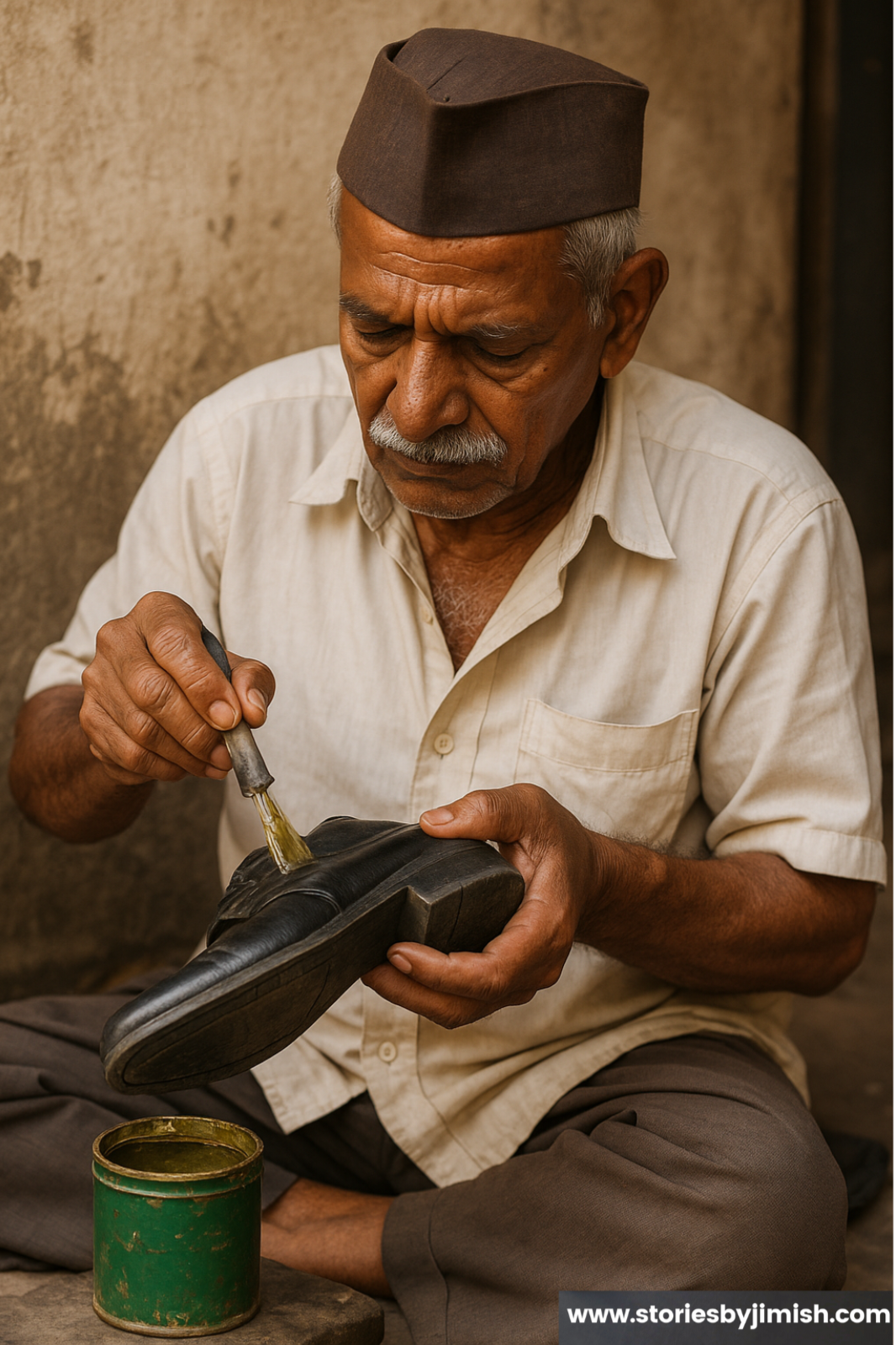
“Kaka, can you please mend this?” I asked in Marathi, as I squeezed my two-wheeler into the narrow space between the cobbler’s tiny shed and a PCO that had been converted into a popular Vada Pav stall over 20 years ago.

One part of my sports shoes had its sole come off, again. (I still don’t get the difference between walking shoes, running shoes, gym shoes, or even bedtime shoes. For old-school me, if it’s not leather or canvas, it’s all just "sports shoes.") So, come Saturday morning, I decided to finally tick the “fix shoes” item off my to-do list.

As soon as I handed over the shoe, Kaka pulled out a rugged piece of sandpaper and began rubbing the inside of the sole that needed to be stuck back to the base. The passion with which he worked was no less than that of a cricketer polishing his bat before walking out to play the final over.

Next, he pulled out a green can - the kind of adhesive I’ve seen carpenters and cobblers use for as long as I can remember. He pried open the lid with a screwdriver-like tool and began applying the glue to the inside of the sole.

“How much does this cost?” came a voice from just behind my right shoulder. It was a lad in his twenties.

“Thirty rupees,” Kaka replied.

The boy gave a quick nod of acknowledgment and walked away.

“Compared to 20 years ago, do many people still come to you to mend their footwear?” I asked Kaka, as he set the shoe aside to let the adhesive dry for a bit.

“Hardly anyone, compared to back then,” he replied, banging the lid of the adhesive tin shut to make sure it was airtight.

“I’ve noticed that too. People rush to buy something new at the slightest sign of damage,” I added.

That seemed to strike a nerve.

“People don’t even bother spending a few rupees to fix things anymore,” he said, animatedly. “I see perfectly good footwear thrown into the trash almost every day. But it’s okay, we’re probably the last generation of cobblers anyway.”

With that, he pressed the sole back into place, pounded it firmly with a heavy tool, and handed the shoe over to me.

In a world quick to replace, the quiet act of mending - be it shoes, clothes, relationships, or jobs - reminds us that not everything needs to be replaced or thrown away. Sometimes, a little care and repair is all it takes.

I GPay-ed Kaka thirty bucks and glanced at the long queue at the next shop, where people waited patiently to buy a Vada Pav for twenty.
Kaka, meanwhile, returned to his Marathi newspaper - quietly waiting for the next customer...

Thursday, May 15, 2025

“Let’s bet on a McD burger then!”


“Let’s bet on a McD burger then!” I challenged him with a grin.

It was 1999. I had passed my 10th standard the previous year and was still pretty tight with this guy. We used to ride our bicycles to and from school together, and even after that, we stayed in touch.

One day, while slouching on his living room sofa, watching TV, he said, “Antara Mali (an actress) is doing so much these days.”

“Yeah, but where did she come from all of a sudden?” I replied.

“Didn’t you see her in the promo just now?” he asked.

I laughed. “That wasn’t Antara Mali, it was someone else.”

Back then, Google had just been founded, and the internet wasn’t mainstream yet. We didn’t have an easy way to verify things. We argued a bit, but I knew he was confused. I let it slide.

A couple of days later, the movie ads started appearing in the newspapers. The debate flared up again. His confidence - bordering on delusion - amazed me. I laughed and told him he needed to stop the madness. That’s when we agreed to place the burger bet.

McDonald’s had just opened its first Mumbai outlet in 1996 at Linking Road, Bandra, and it's burgers were a big deal back then. The burgers then were something else - nothing like what we get at any burger chains today. I was eyeing a free McVeggie with cheese and extra mayo. To gather proof for my win, I started asking around and even sifted through newspapers daily, hoping to find the actress’s name. But no luck. Eventually, the debate faded, and we forgot about it.

A few weeks later, I was passing by Gaiety Galaxy Gemini (movie theatres in Bandra) when I spotted a huge poster of the same movie. The names of the main and supporting cast were printed in the bottom-right corner. On the third or fourth row, I read: “Antara Mali.” I stood there in disbelief, realizing I was everything I had accused my friend of being.

It might seem like a random memory, but it’s often these seemingly trivial moments that become core memories - quiet reminders for the mind to stay mindful. Over the last 25 years, many times when I’ve been absolutely certain about something, I’ve found myself thinking back to this incident. Just to pause and consider: maybe, just maybe, my conviction, judgment, or opinion might be misplaced.

The friend I mentioned here is Ashutosh. Ashu, I’m not sure if I ever treated you to that burger back then - but even if I did, I still owe you a Maharaja Mac. For inadvertently helping me build a core memory that’s stayed with me ever since.

By the way, the movie we were debating about was "Mast". And just like back then, I still ask for extra mayo in my burgers. Some things don’t change.

Wednesday, April 23, 2025

“…do you remember how students reacted when someone in the exam always asked for supplements first?”

“…do you remember how students reacted when someone in the exam always asked for supplements first?” he said.


This was during one of my role transitions. A new role is always exciting, ain't it? Especially for someone like me - a fixer. I’ve always loved spotting leaks, and the thrill of fixing them gives me a dopamine rush. So, when you step into a new job or role, your eyes light up at the fountain of leaks your predecessor may have missed - often due to blind spots or other reasons.


So I got to work - identifying leaks, calling out system & process inefficiencies, and tackling productivity hogs that needed fixing. But what followed was what usually happens when someone new steps in with a grand plan to turn things around: questions, objections, skepticism, and roadblocks from all directions. It was frustrating, but I stayed the course. Still, there came a point when I began to feel that things weren’t heading in the right direction.


Around that time, I had my year-end discussion with my boss - we talked about what went well and what could have been better. But the very next day, a calendar invite landed in my inbox titled “Year-End Catch-Up.” It was from my boss’s boss. It took him just five minutes to succinctly sum up what he thought my past year had been like - and then he said what I quoted above. He had sensed the unrest within me.


“Every individual is really good at a few things, decent at some, and needs to work on others,” he said, pausing to let the thought sink in. “Speed is your forte. But if you keep asking for supplement after supplement, some people may get uncomfortable or defensive. In school exams, it’s all about individual performance. But in the corporate world, most projects are team efforts, with dependencies across stakeholders. You won’t get very far if you’re fast but others can’t keep up. So slow down a little. Eventually, they’ll speed up a bit too and somewhere in the middle, you’ll find the pace to get where you want.” he added.


The thought stayed with me - long and deep. It reminded me of Herbie from The Goal by Eliyahu Goldratt. Herbie was the bottleneck that determined the pace of the entire group. But he wasn’t the problem - he was part of the team. His characteristics simply made him the natural limiter. I realized I’d encounter many Herbies in my work. Heck, I might even be a Herbie for someone else.


From then on, I decided to slow down my fixing crusade. Not stop - just slow down a little. I began trying to understand the Herbies and, where possible, nudge them to pace up a bit.


Is slowing down frustrating at times? Absolutely. But it’s still better than running around with your shirt on fire - spreading the fire.

Thursday, April 10, 2025

“…you drive like Schumacher!"

“…you drive like Schumacher! I used to drive like you when I was younger,” he said, flashing a well-chiseled smile beneath his salt & pepper look.

In 2018, not long after I’d joined Marsh India, I found out one evening that the CFO hadn’t brought his car. Since his home was on my way, I offered him a lift.

I’d already shifted through three gears before we even got out of the building - hence his Schumacher quip. Ironically, Schumi probably hadn’t driven stick in ages, but I got the point.

“Don’t you listen to K-pop? My kids love it,” he asked as I turned the volume down. I love loud music, so it can be jarring for anyone riding with me. I replied in the negative as we approached a signal.

“Don’t you take the Sea Link?” he asked, surprised. “Nope. That route’s longer. Costs more in tolls & fuel,” I replied. I was surprised he even asked. I never saw the point in choosing a longer, costlier route.

“You’re right,” he said, gently cutting through my inner judgment, “but I always take it. The roads are wider, the drive far more peaceful than the cramped city lanes.” I nodded but didn’t quite relate.

The discussion drifted to credit cards. “I use five different ones to squeeze out savings- one each for movies, dining, fuel, travel, and a fifth in case a great deal came up.” I was beaming like an expert as I rattled off my strategy. But the light on my face dimmed when I saw him smile. “I can’t track all that - takes too much mind space. I just use one,” he said calmly. That shut me up. I dropped him off soon after and drove away.

7 years later:

- I now take the longer route to either of my Mumbai offices - Powai or Prabhadevi. There are shorter, fuel-efficient routes through the city, but I choose the wider, longer ones - for the peace of mind.

- Though I still own 7 cards, I now use just one for 90% of my transactions (it gives great returns).

- I still don’t listen to K-pop - but I’ve gotten hooked on Korean shows. Got good mystery, thriller, or sci-fi recos? I’m all ears.

- I’m still a bit of a nightmare for my car’s gearbox, clutch, and brakes - but every now and then, I try the feather-touch approach.

When we meet someone older or more experienced, it’s not always easy to understand why they do things a certain way - until we reach that phase ourselves.

Be it the shift from exciting stock-picking to the “boring” index investing, hunting street bargains to enjoying quieter in-store shopping, from devouring that lip-smacking roadside triple schezwan with andaa topi to (presumably) hygienic restaurant food, or from the thrill of binge-drinking to the calm of slow sipping - it all starts to make sense with time.

“NG, I finally found a card that gives amazing returns on every spend - 33% cashback on a bunch of them!” I poked my head into his cabin and announced one fine day in 2019.

He just shook his head, smiled faintly, and walked out, headed toward the washroom nearby…Some lessons don’t need to be taught - they just wait to be lived.

Thursday, March 20, 2025

"𝗬𝗮𝗮𝗿, 𝗰𝗵𝘂𝘁𝘁𝗶 𝗸𝗮𝗯 𝗹𝗼𝗴𝗲!"

"𝗬𝗮𝗮𝗿, 𝗰𝗵𝘂𝘁𝘁𝗶 𝗸𝗮𝗯 𝗹𝗼𝗴𝗲!"

"When will you take some leaves?"
"Don’t you think you should take a break?"
"Will you really let your leaves lapse?"
"Don't check your emails or Teams when you're on leave! Koshish toh Karo!"

No, these questions and diktats did not come from my family. 

I’ve never been one to take leave unless it’s for an event, vacation, or family commitment—even when my health was 𝘥𝘪𝘭𝘭𝘪 𝘥𝘢𝘭𝘪. The pandemic only reinforced this habit. But then came my latest boss. From mid-2024, he started encouraging everyone to take regular breaks to recharge. When I told him I usually let around 20 leaves lapse each year, he was genuinely intrigued.

From then on, during our catch-ups, he made it a point to nudge me about taking time off. He knew I’d readily update him on my work plans, but it was my leave plan that interested him more.

Eventually, in Q4 of last year, I gave in. I started taking a day off about once a week - 𝘢𝘪𝘸𝘦𝘩𝘪 - and even more often in December. What I experienced was pretty cool:

1. 𝗖𝗹𝗲𝗮𝗿𝗲𝗱 𝗮𝗹𝗹 𝗺𝘆 𝗽𝗲𝗻𝗱𝗶𝗻𝗴 𝗴𝗮𝗱𝗴𝗲𝘁 𝗮𝗻𝗱 𝘃𝗲𝗵𝗶𝗰𝗹𝗲 𝗿𝗲𝗽𝗮𝗶𝗿𝘀—weekday offs meant no long queues.


2. 𝗙𝗶𝗻𝗮𝗹𝗹𝘆 𝗰𝗹𝗼𝘀𝗲𝗱 𝘁𝘄𝗼 𝗺𝗼𝗻𝗲𝘆-𝗱𝗿𝗮𝗶𝗻𝗶𝗻𝗴 𝗽𝗼𝗹𝗶𝗰𝗶𝗲𝘀 I had been meaning to cancel for ages. Just parked myself at the insurer’s office for two hours until they gave in.


3. 𝗕𝗮𝗻𝗸𝗶𝗻𝗴 𝗺𝗮𝘆 𝗯𝗲 𝗼𝗻𝗹𝗶𝗻𝗲, 𝗯𝘂𝘁 𝘀𝗼𝗺𝗲 𝘁𝗵𝗶𝗻𝗴𝘀 𝘀𝘁𝗶𝗹𝗹 𝗿𝗲𝗾𝘂𝗶𝗿𝗲 𝗮 𝗯𝗿𝗮𝗻𝗰𝗵 𝘃𝗶𝘀𝗶𝘁. Got those done too. 𝘓𝘶𝘯𝘤𝘩 𝘵𝘪𝘮𝘦 𝘩𝘢𝘪? 𝘒𝘰𝘪 𝘯𝘢𝘪, 𝘮𝘢𝘪𝘯 𝘳𝘶𝘬𝘵𝘢 𝘩𝘶𝘯.


4. 𝗦𝗽𝗲𝗻𝘁 𝘁𝗶𝗺𝗲 𝗯𝗿𝘂𝘀𝗵𝗶𝗻𝗴 𝘂𝗽 𝗼𝗻 𝗰𝗮𝗻𝗱𝗹𝗲𝘀𝘁𝗶𝗰𝗸 𝗽𝗮𝘁𝘁𝗲𝗿𝗻𝘀 used in technical analysis of stocks. The Hanging Man and Hammer are my favorites.


5. 𝗣𝗶𝗰𝗸𝗲𝗱 𝘂𝗽 𝗮 𝗯𝗼𝗼𝗸... 𝘱𝘩𝘪𝘳 𝘸𝘢𝘢𝘱𝘪𝘴 𝘯𝘪𝘤𝘩𝘦 𝘳𝘢𝘬𝘩 𝘥𝘪𝘺𝘢 and binge-watched Netflix shows instead.


Did plenty more on these 𝘢𝘪𝘸𝘦𝘩𝘪 leave days, and now I try to take them more often.

Try taking a leave - 𝘢𝘪𝘸𝘦𝘩𝘪 - if you haven't. 𝗖𝗮𝘀𝘂𝗮𝗹𝗹𝘆 𝗰𝗮𝘀𝘂𝗮𝗹 leaves kabhi leke dekho. It could be worth it.

Wednesday, March 12, 2025

"Your daughter is hurt. Do you want to come and pick her up?"

"Your daughter is hurt. Do you want to come and pick her up?" asked the teacher —let’s call her Daya.

Now, if any parent were to receive such a call, the only possible response would be a panicked "Yes!". Thankfully, I was working from home that day and rushed to the school.

"Sir, shorts are not allowed in school," I recalled the guard saying once when I had gone to pick her up wearing them. Already in my car, I hoped he’d let me through today. As soon as I arrived, I asked, "Where is the nursing room?" The guard, probably realizing this wasn’t the right moment to comment on my attire, simply pointed me in.

"She looked a bit worried, but I examined her thoroughly. The injury wasn’t anything concerning, so I sent her back to class," said the nurse, Ms. Hathi.

I quickly made my way to her classroom. As soon as V (my daughter) saw me, tears started streaming down her face. My heart sank. Before I could say anything, she blurted out, "I am absolutely fine. I don’t want to miss class!"

She wasn’t crying because of pain but because she was being sent home. I checked in with her and then turned to Daya, requesting that she allow V to stay. Daya explained that she had already completed the paperwork to send V home, and as per protocol, she had to leave. I asked if she could approach a senior staff member to reconsider. The senior was in a meeting and likely dismissed her. Daya then gently counseled V and requested us to leave.

On the ground floor, I stopped V and asked, "Do you really want to attend school?" She nodded without hesitation. I knew she hates missing school. "Then let's go to the principal," I said. At that moment, she hesitated. "No, no, let’s go home. It’s okay," she said quickly. That "It’s okay" got to me. As a dad, I wasn’t okay with my daughter having an "It’s okay" experience—settling for something she clearly didn’t want.

We went back up to where principal's office was located. Outside, we were greeted by an EA—let’s call her Babitaji. "Sir, why do you wish to meet the principal?" she asked politely. I explained the situation and shared my perspective: protocols should be followed in spirit, not just in letter. If Hathi and I were both okay with V staying, there was no reason she shouldn’t be allowed back in class.

Now, the difference between good EAs and great EAs is that the great ones solve small problems before they reach their bosses. She quickly called Hathi to confirm the details, then called Daya. After listening to both, she instructed Daya to allow V to attend class. Daya soon arrived at the office, and a smiling V walked away with her. I thanked Babitaji for her timely help and left.

Rules and policies exist for a reason, but applying them with empathy makes all the difference. Sometimes, what’s ‘by the book’ isn’t what’s best for the situation. Great leadership—at any level—is about knowing when to adapt and Babitaji did just that!

The image? Well, that’s me after going through a rollercoaster of emotions that day!

Thursday, February 13, 2025

"That game is a waste of money, V, trust me!" [Republished]

"That game is a waste of money, V, trust me!" I told my then 7-year-old daughter.

It was her 7th birthday, and we had taken her out for some fun and games at her favorite place, which was filled with electronic games.

"Alright, V, we’ve played a lot of games now. Let’s head out for dinner," I said after a while. 
They are never happy when they are told such things so I got the usual eye roll. "Papa, can I please play that one? I know I can win this time," she insisted, flashing one of those adorable expressions she knows works on me like a charm.

She was pointing at a claw machine—the one where you maneuver a dangling claw to pick up prizes. As a kid (and even as an adult), I’ve almost never won anything from those machines. Every time she had asked to play it before, I would tell her it was a waste of money because they rarely yield anything, but this time, the birthday girl was more persistent. I gave in, but with one condition: I would help her position the claw. (Funny, considering I’ve always failed at it. Bad decision, I know.)

She agreed, and I carefully positioned the claw over a pack of tickets. "Alright, press the button now," I instructed, confident in my ‘expert’ positioning. But before I could react, she swiftly adjusted the claw’s position herself and hit the button. I raised my hands in protest... but, miraculously, the claw picked up not one, not two, but three bundles of tickets!

After some victory cries, we rushed to the ticket eater machine. (For the uninitiated, the ticket eater counts the tickets, and at the end, you swipe a card to add the total to your balance. These tickets can be redeemed for prizes.) The counter showed 300+ tickets, and we were ecstatic! We ran to the rest of the family, proudly announcing our achievement.

I then quickly went to check the ticket balance on our card, and to my shock, the 300+ tickets weren’t showing up! That’s when it hit me—when we saw the figure of 300+ on the ticket eater, I was so excited to share the news that I completely forgot to swipe the card to credit the tickets!

I rushed back to the counter and saw two kids jumping with joy... They had just fed their tickets into the machine and had probably ended up adding our 300+ tickets to their card as well.

Learnings:

1. Just because you couldn’t do it doesn’t mean the juniors can’t either.

2. Don’t interfere too much, especially after point 1. They might just do it their way—and maybe even better.

3. Excitement is great, but it can cloud your judgment. If not managed well, it might lead to losing everything in the heat of the moment.

4. Sometimes, people benefit from others' mistakes without intending to. Lady Luck plays her games, and on such occasions, the best you can do is smile and accept it gracefully.

"What do we buy with the tickets?" she asked eagerly.

"Erm… let’s accumulate some more and get something more meaningful next time," I replied, placing an arm around her shoulder as we walked out...

Monday, January 27, 2025

"Agar tum mil jao, zamana…" she sang

"Agar tum mil jao, zamana…" she sang, her voice flowing softly over the bus speakers.

It was around 8 a.m. on a morning in 2006. My roommates and I had just boarded the company bus from Aundh (Pune) that would take us to our Infosys office in Hinjewadi.

"Did you read about that email from NRN (Narayana Murthy)? It says don’t stay in the office beyond 8 p.m.," one of the guys said, adjusting his blue-striped tie, which looked sharp against his white shirt. Mon to Thurs, we were required to wear a tie (except during the summer).

At the time, an email was making the rounds at Infy. It claimed that unmarried folks stayed late at the office just to surf the net and kill time. The mail advised against such practices and encouraged everyone to leave on time. Recently, I learned that the email was just a piece of someone’s creativity—NRN had never written it.

As the bus moved, my mind wandered back to my training days in Mysore. It was Dec 2005, and NRN had come to address thousands of us at the open-air amphitheater. "Please don't call me sir," he had politely requested when one of us stood up to ask a question. We were in awe of him—a man who had built Infy, an incredible organization that hired freshers like us and transformed us into polished professionals.

"Look, she just boarded the bus," I heard a guy say softly from the seat behind me, as two smartly dressed girls stepped onto the bus, breaking my train of thought and snapping me back to the present.

As I gazed out of the window, my thoughts drifted to an incident that had occurred a few days ago back home in Mumbai. I had a minor altercation with an elderly uncle in our society. Mom had been a silent witness to it. Later, she gently said, "Beta, as adults grow older, they start behaving like children again. It's a cycle. They get upset over small things and may say things that seem irrational. You need to let it go—just like you would if a child acted that way."

A few weeks ago, when newspapers, channels, and influencers all jumped on the NRN-bashing bandwagon, I couldn’t help but recall what my mom had said years ago. While I don’t agree with his recent opinion, as an ex-Infoscion, I knew it was important to look at the bigger picture and let the episode go. NRN is undeniably one of the greats, and though public figures are expected to be more cautious with their words, age inevitably leaves its mark on everyone. Sometimes, the elderly may say things that come across as irrational or unpopular, but such moments can often be dismissed for what they are—an occasional lapse due to age, nothing more.

"Tu hi meri shab hai…" began playing over the bus speakers. "Yaar, yeh Emraan Hashmi ke saare gaane kya gajab hote hain," remarked the guy sitting next to me. [Emraan Hashmi’s songs are amazing.] "Haan yaar, woh toh hai," I replied with a smile [Yeah buddy, that’s true.], as the distinctive green ‘gola’—the spaceship-shaped office building that housed my desk—came into view in the distance...

Monday, December 9, 2024

"𝐁𝐮𝐭 𝐙𝐢𝐚'𝐬 𝐦𝐨𝐭𝐡𝐞𝐫 𝐰𝐚𝐬 𝐩𝐫𝐨𝐦𝐩𝐭𝐢𝐧𝐠 𝐡𝐞𝐫," [Republished]

"𝐁𝐮𝐭 𝐙𝐢𝐚'𝐬 𝐦𝐨𝐭𝐡𝐞𝐫 𝐰𝐚𝐬 𝐩𝐫𝐨𝐦𝐩𝐭𝐢𝐧𝐠 𝐡𝐞𝐫," said my 6-year-old daughter, who was in Grade 1 at the time and experiencing her first-ever school assessment that week.

This was about four years ago during the pandemic when schools had shifted online. The school had introduced assessments to evaluate how well students were grasping the subjects. Students were required to stay on camera and unmuted throughout to ensure there was no prompting from parents or family members.

To be honest, I was more anxious than my daughter. I prepped her with pep talks, emphasizing the importance of giving her best effort and not dwelling too long on tricky questions. “It’s okay to move on,” I told her, “so you don’t jeopardize the next one.”

On the day of the assessment, I watched nervously as she tackled the subject I believed she was strong in. After submitting her answers, I reviewed them and was surprised she hadn’t done as well as I expected.

As I pointed out her mistakes, she looked at me and asked, “Why didn’t you help me even a little? I could hear other parents on the call prompting their kids.” Her question caught me off guard, but it was an important moment to explain the concept of integrity. I sat her down and helped her understand why assessments are about individual effort and why doing the right thing matters, even when others around us may not be following the same path. 

Everyone, regardless of age, needs a reminder of certain values from time to time—even when they already know them. Most importantly, there are moments when we feel tempted to intervene, perhaps believing it’s our right or even our duty to do so. However, it’s crucial to discern when intervention is necessary and when it’s best to step back.

There’s a profound line from the show The Crown, where Queen Mary tells Queen Elizabeth: “𝐓𝐨 𝐝𝐨 𝐧𝐨𝐭𝐡𝐢𝐧𝐠 𝐢𝐬 𝐭𝐡𝐞 𝐡𝐚𝐫𝐝𝐞𝐬𝐭 𝐣𝐨𝐛 𝐨𝐟 𝐚𝐥𝐥. 𝐀𝐧𝐝 𝐢𝐭 𝐰𝐢𝐥𝐥 𝐭𝐚𝐤𝐞 𝐞𝐯𝐞𝐫𝐲 𝐨𝐮𝐧𝐜𝐞 𝐨𝐟 𝐞𝐧𝐞𝐫𝐠𝐲 𝐭𝐡𝐚𝐭 𝐲𝐨𝐮 𝐡𝐚𝐯𝐞. 𝐓𝐨 𝐛𝐞 𝐢𝐦𝐩𝐚𝐫𝐭𝐢𝐚𝐥 𝐢𝐬 𝐧𝐨𝐭 𝐧𝐚𝐭𝐮𝐫𝐚𝐥, 𝐧𝐨𝐭 𝐡𝐮𝐦𝐚𝐧.”  - the application of which is needed far too often in all our lives, more often than we realize.

Tuesday, November 19, 2024

"…arre Jimish, aaj half day?"

"…arre Jimish, aaj half day?" shouted a guy a couple of rows away as I picked up my bag from my desk. ["Jimish, half day today?"]

This was at one of my earlier employers. While many organizations became more progressive after the pandemic, this one was quite strict with in-and-out times back then. One had to swipe in by 10:00 am. If you swiped in after 10:00, the system would mark you as taking a half day.

With a little daughter waiting at home, I made it a priority to wrap up my work on time and leave by 6:30-7:00 if my tasks and hours were completed. However, some of my colleagues had a habit of working late, often staying until 9-10 pm. despite arriving before 10 am. It wasn’t always because they were being productive; it was because their bosses stayed late. And those bosses stayed late because their bosses did, leading to a culture where anyone could be summoned at any hour. Over the years, I worked with different bosses, but all of them knew I was particular about my schedule. If any work was still pending, I would complete it from home later that evening or over the weekend.

There was one particular guy who made it his mission to spend 11-12 hrs at work daily. If he noticed anyone leaving on time he would make loud remarks like, "Aaj half day?", "Kaam nahi hai aaj?" or "Ye dekho, ye toh ghar jaa raha hai."

While I didn't care about his opinions, I disliked the unwanted attention. One day, I wondered, "How does he know I'm leaving for the day?" It could be the sound of me packing, closing my drawers, or simply the sight of me walking out with my bag. So, I decided to change my routine. I left my laptop bag and tiffin in my car and walked into the office with just my laptop. Before and after lunch, I would go down to the car to retrieve and return my tiffin. When it was time to leave, I would simply walk out with my laptop. This way, no one, especially the loud guy, could tell if I was heading to a meeting or leaving for the day. Eventually, people caught on that when I walked out with my laptop late in the evening. However, without the sound or sight of me packing up, it was no longer obvious.

Eventually, I left that job, but I had grown fond of the routine. For many years now, I’ve continued to leave home with just my laptop (no bag) and tiffin bag in hand, walking into work carrying only my laptop. It keeps things minimal and simple. Essentials are stored in my office locker. This habit also ensures a short walk before and after lunch to pick up and drop off my tiffin. While I know that no one at my current employer would ever think like that loud guy, I’m sure some wonder about the story behind why I walk in with just my laptop. That’s why I decided to share this today.

I’m not suggesting everyone should adopt this habit—especially if you take public transport or ride a two-wheeler—but if you drive to work, give it a try someday. You might appreciate the minimalist approach too. It’s a literal load off your shoulders.

Friday, October 4, 2024

Akbar, Amar. Anthony

Akbar, Amar, Anthony.

I recently started a bit of planting—not much, just 3-4 pots on the kitchen window grill. One of the plants is cherry tomatoes. A couple of months ago, I sowed some seeds, and out came three cute plants. I named them Amar, Akbar, and Anthony.

Despite my obsessive observation and care, one morning I noticed that one of the stems was bent, probably broken. It was Akbar. I thought it would recover on its own, but a couple of days later, I saw the damage had worsened. I knew I had to do something—perhaps support it or tie it up to help it heal—but I decided to put off the task until the next day.

The next morning was heartbreaking. I found Akbar severed from the cut, lying lifeless on the soil. I realized my procrastination had cost Akbar its life. Overcome with guilt, I gently picked it up and placed it back in some freshly dug soil, clinging to a sliver of hope for a miracle.

In the next few days, Akbar's leaves still seemed to hold up well. After a couple more days, I noticed new leaves starting to appear, and I knew Akbar hadn’t given up yet. Although Akbar's growth slowed while Amar and Anthony continued at their usual pace, Akbar had to grow fresh roots to have any chance of survival—and it did well.

Eventually, I had to repot Amar and Anthony into a bigger pot so they could thrive, leaving Akbar behind in the small pot to develop further. Today, Akbar has grown tall enough to be moved to its own big pot. As the saying goes in Hindi, "Der Aaye, Durust Aaye" (better late than never).

A few days ago, I learned that the tomato stem has roots all along it. So, planting the stem deeper into the soil encourages more roots to develop. Now I realize that Akbar’s "miracle" actually has a scientific explanation!

While I’ve discovered that planting can be quite therapeutic, the hobby also brings with it a lot of learning and reinforcement. From this experience:

- Procrastination often comes at a high cost. It's even worse when our procrastination affects someone or something else.

- Sometimes, it's okay to be hopelessly hopeful and act in good faith. Miracles do happen.

- While timely support is crucial, it’s never too late to offer help, even if we feel it might be too late.

Though Amar and Anthony are taller than Akbar, I’m sure they are proud of their sibling for battling its way up. Over time, with continued care and support, I’m confident that Akbar will grow as tall as its siblings and, when the time comes, bear equally cute little tomatoes.

This post isn’t just about plants. Let’s support the "Akbars" we encounter, before it’s truly too late.

P.S.: The attached video is a collection of Instagram stories I posted throughout this experience.

Friday, September 13, 2024

"...bhai, do you remember the password to my sheet?"

"...bhai, do you remember the password to my sheet?" I WhatsApped one of my best friends recently.

I did my PG in 2009 and began saving/investing. I've always been an Excel nerd, and even today, the first thing I open when I want to track or list something is an Excel. So one fine day in 2009, I right-clicked on my laptop, created a new Excel file, and named it "Balance Sheet" (don’t ask me why). From that point on, I made it a habit to update it on the 1st of every month. I started with two sheets in the workbook: Income & Expenses.

Income sheet tracks my realized income each month, primarily consisting of my salary and the realized returns or losses from my investments & trading during the prior month.

Expense sheet includes a column for credit card bill amts (to track cc spends) and another for all other bank debits. Summing these gives me my total expenses for the month. A simple formula then calculates the % of savings for the month by linking it to the net income.

Later on, I added a sheet for insurance—both health & life. Did you know that if you have a PF account, you're automatically covered for life insurance through the EPFO? It’s called EDLI. Look it up. Now, if you didn’t know that, imagine the plight of your family. So, this sheet contains all policy numbers, premium dates, amounts and coverage specifics.

I follow a routine I call the "monthly drill." I execute it on the 1st of every month. I settle my CC bills (all billing dates set for 20th), rent, all the domestic staff salaries (via GPay, which serves as a log for future—no cash) and other monthly bills. I withdraw a small amount of cash (typically need no more than 4-5k a month, as all my transactions are digital). The day isn’t complete until I update the balance sheet. I log my expenses, update all income entries, and review the % of savings for the month. Then, I compare it to the savings of the prior month, quarter, and year to check for any overspending or undersaving, which helps me make course corrections for the months ahead.

The final ritual of my monthly drill is to email the updated balance sheet to myself on Gmail. The sheet is password-protected, and the password is known to my family and two close friends. Although my friends don’t have access to the Excel or my email, they will share the password with my family in case they forget or can’t find it. In all likelihood, the sheet will always be updated through the previous month.

The purpose of this post isn’t to brag, but to encourage those of you who haven’t yet started a similar practice that fits your style & needs. A sheet like this not only helps you track your wealth & savings rates, but it can also serve as a valuable resource for your family—a ready reckoner—when the inevitable happens.

It only takes about an hour, but isn’t that less than the average time most of us spend scrolling through social media each day? This weekend could be the perfect time to start.

Happy tracking!